
MENU
 Products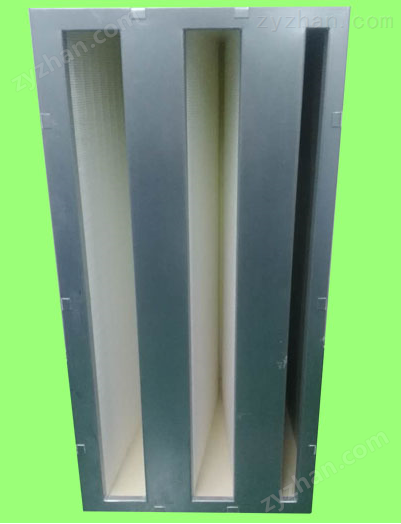
1622018819@qq.com
+8613729962354,+8615369622507
YTF High-Voltage, Panelless Filter Manufacturer
Inertia and Diffusion
Particulate dust undergoes inertial motion in airflow. When it encounters randomly arranged fibers, the airflow changes direction, and the particles, due to inertia, deviate from their original direction and collide with the fibers, becoming adhered. Larger particles are more likely to collide, resulting in better filtration.
Small particulate dust undergoes random Brownian motion. The smaller the particle, the more intense the random motion, the more opportunities it has to collide with obstacles, and the better the filtration effect. Particles smaller than 0.1 micrometers in the air mainly undergo Brownian motion; smaller particles have better filtration effects. Particles larger than 0.3 micrometers mainly undergo inertial motion; larger particles have higher efficiency. Particles with little diffusion or inertia are difficult to filter. When measuring the performance of HEPA filters, the efficiency value for difficult-to-measure dust particles is often specified.
Inertia and Diffusion
Particulate dust undergoes inertial motion in airflow. When it encounters randomly arranged fibers, the airflow changes direction, and the particles, due to inertia, deviate from their original direction and collide with the fibers, becoming adhered. Larger particles are more likely to collide, resulting in better filtration.
Small dust particles undergo random Brownian motion.
The smaller the particle, the more intense the random motion, the more opportunities it has to collide with obstacles, and the better the filtration effect. Airborne particles smaller than 0.1 micrometers primarily undergo Brownian motion; small particles result in good filtration. Particles larger than 0.3 micrometers primarily undergo inertial motion; larger particles have higher efficiency. Particles with little diffusion or inertia are difficult to filter. When measuring the performance of HEPA filters, the efficiency value for difficult-to-measure dust particles is often specified.
YTF High-Voltage Air Filter Manufacturer
Inertia and Diffusion
Distant dust particles undergo inertial motion in the airflow.
When they encounter randomly arranged fibers, the airflow changes direction, and the particles, due to inertia, deviate from their direction and collide with the fibers, becoming stuck.
Larger particles are more likely to collide, resulting in better filtration.
Small dust particles undergo random Brownian motion.
The smaller the particle, the more intense the random motion, the more opportunities it has to collide with obstacles, and the better the filtration effect.
Airborne particles smaller than 0.1 micrometers primarily undergo Brownian motion; small particles have good filtration. Particles larger than 0.3 micrometers mainly undergo inertial motion, and the larger the particle, the higher the efficiency. Particles with little diffusion or inertia are difficult to filter out. When measuring the performance of HEPA filters, the efficiency value for dust particles that are difficult to measure is often specified.
We will reply to you as soon as possible. Feel free to leave us a message; we will contact you within 24 hours to provide the latest solution to your problem. Thank you!
Contact UsCopyright © 2026 Dongguan Youte Purification Technology Co., Ltd All Rights Reserved Powered. Privacy Policy Terms Of Service Sitemap
We use cookies to enhance your browsing experience, deliver personalized content, and analyze website performance. Strictly necessary cookies are essential for the proper functioning of the website and cannot be disabled. You may choose to enable or disable analytical cookies, but disabling certain cookies may affect some features or your overall browsing experience. You can manage your cookie preferences below. For detailed information, please refer to our Privacy and Protection Policy.
If you have any comments, suggestions, or questions regarding our use of cookies or this Privacy Policy, or if you wish to make a request or inquiry concerning your personal information, please contact us at 1622018819@qq.com